
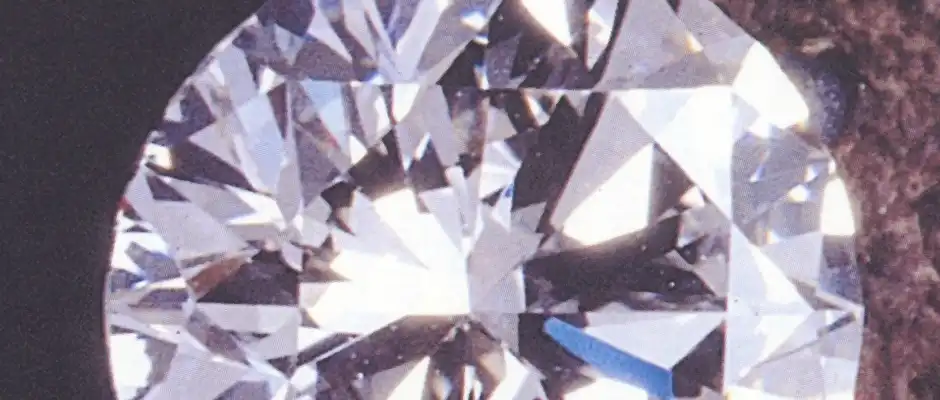
The breakthrough in identifying this highly controversial treatment process was achieved in collaboration with Professor E. Fritsch (University of Nantes, France). The De Beers DTC research center in Maidenhead (UK) contributed by providing a mixed batch of untreated and HPHT-treated Class IIa diamonds.
The SSEF was able to verify its ability to detect HPHT-treated colorless IIa diamonds with 100% accuracy. The research program benefited from significant international support from diamond dealers and gemological laboratories.
On March 11, 2000, three months later, the Swiss Gemmological Institute SSEF announced its ability to detect GE POL-treated diamonds. Since then, SSEF has offered a service for identifying GE POL-treated diamonds, based on the photoluminescence properties of diamonds cooled with liquid nitrogen (-180 °C). The photoluminescence spectra are obtained using a Raman microprobe. Most, if not all, colorless or color-enhanced diamonds treated with high pressure/high temperature (HPHT) are affected.
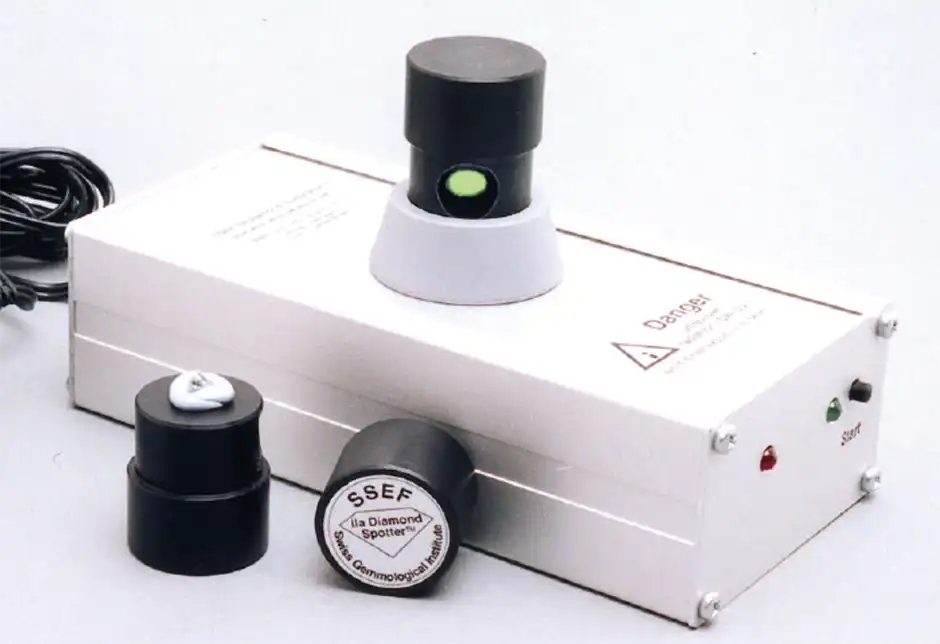
SSEF has also designed a small device (the SSEF IIa Diamond Spotter™, preferably used with the SSEF IIa Diamond Illuminator™), allowing diamond dealers to easily identify Type IIa diamonds that may have undergone HPHT treatment. After identification with the SSEF IIa Diamond Spotter™, Type IIa diamonds can be verified by SSEF or another laboratory to determine if they are GE POL treated diamonds.
Since May 1999, colorless diamonds have been arriving on the jewelry market, their color obtained through high pressure/high temperature (HPHT) treatments.
The HPHT process, developed by General Electric (GE), involves treating brownish to brown Type IIa diamonds. It reduces their color, making them as colorless as possible. The amount of this new material is small because the treatment is only effective on Type IIa diamonds. This type of diamond represents only 1% to 2% of total gem diamond production. Type IIa diamonds contain extremely low amounts of nitrogen, which are undetectable by infrared spectroscopy. A property associated with this type of diamond is its transparency to short-wave ultraviolet light (254 nm). Despite claims that the GE POL treatment was undetectable, after a year of intensive research, gemologists at the SSEF were the first to present a spectroscopic detection method for this treatment in gemological laboratories.
It can also be detected by UV-VIS spectroscopy between 200 and 300 nm, which involves deuterium light instead of the classic halogen used in integrated spheres.
Originally, GE POL-treated diamonds were marketed by Pegasus Overseas Limited, then Monarch, and later Bellataire, all subsidiaries of Lazare Kaplan International LKI. This company stamped the GE POL mark on the girdle of these color-enhanced diamonds. However, after the GIA Gem Trade laboratory discovered some GE POL-treated diamonds with the GE POL markings removed, a detection method that doesn’t rely solely on the presence of a girdle mark is the only way to maintain consumer confidence in the diamond market. Currently, Bellataire and/or POL no longer sell treated diamonds but offer treatment services.
The value of synthetic diamonds has plummeted in recent years to record lows, now covering only the cost of cutting and lab reports. However, treated diamonds are still essentially natural brown diamonds. This still gives them some value, equivalent to the value of a brown diamond. This represents a decrease of approximately 30 to 45% compared to the same natural color. Treated diamonds are primarily F, G, or H color.
Dozens of gemological instrument manufacturers now offer models at affordable prices for retailers: GEMTRIX, PRESIDIUM, BELIZE, OTI, SMART PRO, and YEHUDA’s Sherlock and Watson. All can distinguish natural from synthetic diamonds. The exception is rare Type IIa diamonds, which is precisely the type to which brown diamonds have been treated. Therefore, a more in-depth analysis using Raman, UV-Vis, and infrared spectroscopy is required.
It’s worth noting that (rare) colorless (untreated) type IIa diamonds are worth approximately 10% more than type Ia and Ib diamonds of the same quality. They have been nicknamed “Golconda Diamonds” and are often mentioned at auctions at Christie’s or Sotheby’s.