
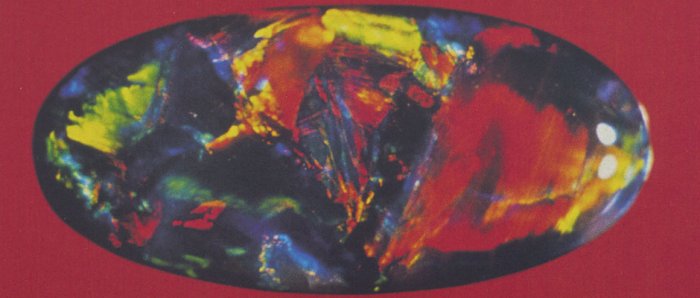
Opal is one of the most intriguing and enchanting gemstones the earth has to offer. With its unique play of color and mysterious appearance, it has fascinated jewelers, collectors, and gemstone enthusiasts worldwide.
This article covers the origin of opal, its chemical composition, the phenomenon of opalization, and the quality aspects jewelers should consider when selecting this exceptional gemstone and determining its value.
Origin of opal
Opal is a mineral form of silica found in various parts of the world. The best-known opal mining locations are Australia, Ethiopia, Mexico, and the United States. The discovery of opal in Australia in the 19th century revolutionized the opal industry, making the country the world’s largest producer.
The origin of opal dates back millions of years, when silica in gel form circulated in a moist environment. Over time, and through geological processes such as temperature changes and pressure, this gel transformed into the gemstone we know today. The unique shapes and patterns found in opal result from the ordering of silica structures, which refract and reflect light in a distinctive way.
Chemical composition
Opal is mainly composed of silicon dioxide (SiO₂) with a variable water content that can reach up to 21%. This makes opal a hydrated form of silicon dioxide. Its chemical composition is responsible for the diversity of colors and patterns seen in opals. Trace elements such as iron, copper, or manganese can also contribute to color variations.
The unique internal structure of opal—consisting of a network of microscopic silica structures—plays a crucial role in creating the characteristic play of color. This color play results from light interference as light is refracted and reflected by these tiny structures.
Its hardness on the Mohs scale is 5.5 to 6.5. Specific gravity ranges from 2.1 to 2.2. Opal is singly refractive, with values ranging from 1.44 to 1.46. Opal has no dispersion and no pleochroism, and its fracture is conchoidal.
What is opalization?
Opalization refers to the process by which opal develops its characteristic luster and play of color. This phenomenon is due to the stone’s internal structure, which allows light to interact with microscopic silica structures. When light hits opal, it is refracted and reflected in different ways, resulting in the brilliant colors associated with this gemstone.
“Opalization” can also refer to the milky appearance of common opal, but it can also occur in other colored stones.
There are different forms of opalization, depending on the arrangement of the silica structures. The most common types are:
- Hydrophilic opals: higher water content and a softer appearance with a subtle play of color.
- Hydrophobic opals: lower water content and often a livelier, more intense play of color (also called precious opal).
- Boulder opals: from Australia, still attached to their host rock, resulting in unique patterns and textures.
- Fire opal (Mexican opal): often transparent with a vivid “fiery” play of color from bright yellow and orange to red. A 5–10 carat stone of top quality can quickly reach 500–600 USD per carat.
Precious opal shows iridescence and/or opalization. Opalization should not be confused with opalescence, which is a milky appearance found in certain (typically lower-priced) opals and some other gemstones.
In precious opal, iridescence is caused when incoming light strikes a perfectly organized structure made of silica “spheres” or “rods” with a diameter of 150 to 300 nanometers, visible only with an electron microscope. In precious opals, these are of regular size and stacking, creating narrow openings where light rays are diffracted into an exceptional color palette.
A black opal with orange and red play-of-color and additional hues can exceed 10,000 USD per carat on the wholesale market at around 10 carats.
Quality factors for jewelers
When selecting opals for jewelry, jewelers consider several quality criteria that determine value and appeal. Key factors include:
Color: Opal can display a wide range of colors, from white and black to vivid variations. The most valued opals show a lively play of color in multiple shades, including so-called fire opals. Transparency also affects quality: clear, transparent opals (often Mexican) show colors from yellow and orange to fire red. Opaque, milky opals are generally less valuable.
Finish
The way opal is cut and polished influences its final appearance. A well-cut opal maximizes the play of color. Opals are typically cut as cabochons or in freeform shapes.
Treated opals
Some lower-quality opals are impregnated with carbon powder to increase light effects and contrast. Others are protected with an epoxy layer against cracking. “Drying out” is a weak point of opal; as with ivory, it is best not to place opal directly under spotlights (display cases) to reduce the risk of cracking.
There are also opal doublets: an opal cabochon on a piece of onyx or black glass, or a slice of precious opal on common opal.
Origin can influence value as well. Australian opals are often the most sought after, though Ethiopian and Mexican opals are also gaining popularity.
Opal is not only a beautiful gemstone but also a fascinating natural phenomenon with a rich history and unique properties. Understanding its origin, chemical composition, and opalization helps jewelers and enthusiasts appreciate the value and beauty of this exceptional stone.
Whether you are a jeweler searching for the perfect opal for a piece of jewelry, or simply an enthusiast wanting to learn more, the world of opal remains a source of wonder and inspiration.